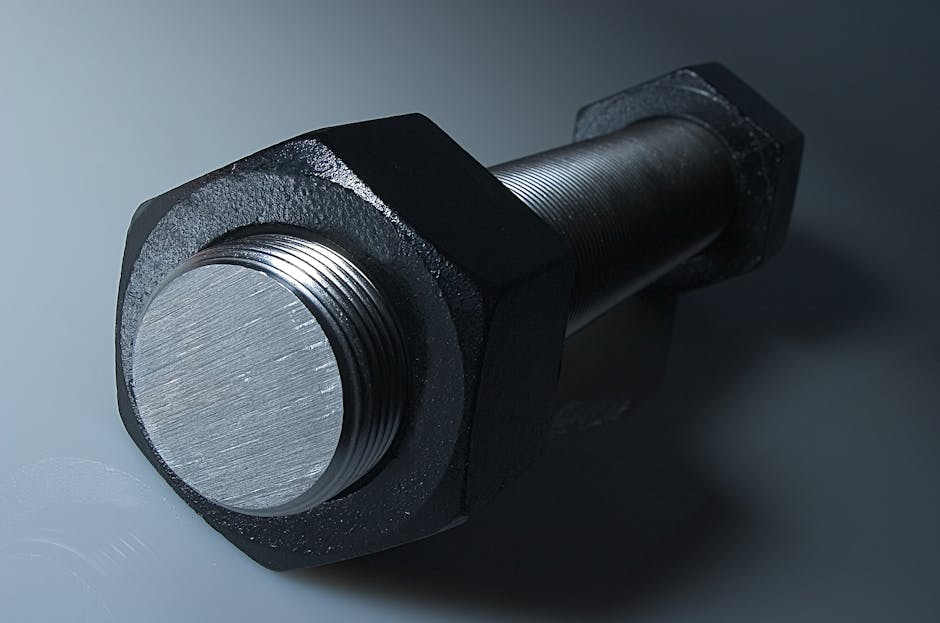
 Photo by Pixabay on Pexels
Yield Strength is the stress at which a material begins to deform permanently, measured in MPa. Below this point, deformation is elastic.
In practical applications, understanding Yield Strength is vital for engineers when selecting materials that will bear loads without deforming permanently. For example, in structural engineering, choosing steel with a high enough Yield Strength ensures that buildings and bridges can withstand significant stress without collapsing or becoming structurally compromised over time. Similarly, in mechanical engineering, the selection of bolts and
fasteners relies on their Yield Strength to ensure they don't yield under the loads imposed by machinery.
The relevant standards for measuring Yield Strength include ISO 6892-1:2016 (Mechanical properties of sheet, strip, and flat products) and BS EN 10002-1:2011+A3:2017 (Metallic materials -- Tensile testing -- Part 1: Method of test at room temperature). These standards outline methods for determining the Yield Strength by measuring a material's elongation under load. For instance, ISO 6892-1 specifies that Yield Strength is determined using either the offset method or the proof stress method.
Common values and ranges for Yield Strength vary widely depending on the material. For carbon steel grades like EN8, typical Yield Strength ranges from 350 to 470 MPa, making it suitable for applications requiring moderate tensile strength. Stainless steels such as A2-70 offer higher Yield Strength, often around 690 MPa, ideal for environments where corrosion resistance is critical alongside mechanical integrity.
When selecting engineering components, knowing the Yield Strength helps engineers match materials to specific load requirements. For instance, a maintenance engineer replacing bolts in heavy machinery might opt for grade 8.8 bolts (with a Yield Strength of at least 640 MPa) over lower-grade alternatives like A2-70 (Yield Strength of 550 MPa) if the application demands higher tensile strength.
In summary, Yield Strength is important in engineering design and material selection processes to ensure components can withstand loads without undergoing permanent deformation. By adhering to international standards and understanding typical values for various materials, engineers can confidently choose the right components for their applications.
Frequently Asked Questions
What is Yield Strength?
The stress at which a material begins to deform permanently, measured in MPa. Below this point, deformation is elastic.
What is Yield Strength and why is it important for engineers?
Yield Strength is the stress at which a material begins to deform plastically, typically measured in MPa. It's vital for engineers because selecting materials with sufficient Yield Strength ensures structures and components can withstand loads without permanent deformation.
Which methods are specified by ISO 6892-1 for determining Yield Strength?
The ISO 6892-1 standard outlines two main methods to determine Yield Strength: the offset method, which involves defining a strain value as a percentage of the original gauge length, and the proof stress method, which uses a specific load level.
How should engineers choose materials based on their Yield Strength for structural applications?
Engineers should select materials with Yield Strength values that match or exceed the expected loads in structural designs. For instance, steel grades like S355JR have a higher Yield Strength than lower grade steels, making them suitable for projects requiring high durability and resilience.
What are some relevant British Standards for testing Yield Strength?
BS EN 10002-1:2011+A3:2017 is one of the key standards used in the UK to measure Yield Strength by applying tensile tests at room temperature. This standard provides detailed procedures for determining the mechanical properties, including Yield Strength.
Where can UK engineers find suppliers for materials with specific Yield Strength values?
UK-based engineers can find suppliers offering a range of materials with various Yield Strength levels from companies such as BSS Stainless and McKechnie Metals Ltd., which stock different grades of steel and alloys suitable for engineering projects.
What does Yield Strength refer to in materials science?
Yield Strength is the stress level at which a material starts to deform plastically, typically measured in MPa. This property is critical for selecting materials that can withstand loads without permanent deformation.
How do engineers determine the appropriate Yield Strength for structural components like beams and columns?
Engineers choose materials with sufficient Yield Strength based on the expected loading conditions and design requirements. For instance, a beam supporting heavy loads should be made of steel with a high Yield Strength to ensure it remains stable under stress without yielding.
Which standards are used in the UK to measure Yield Strength for metallic materials?
In the UK, engineers rely on ISO 6892-1:2016 and BS EN 10002-1:2011+A3:2017 to determine the Yield Strength of metallic materials. These standards provide detailed methods for tensile testing to calculate this critical property.
Where can UK engineers find suppliers offering metals with specific Yield Strength values?
UK engineers can visit mlc.org.uk or contact local metal suppliers who stock a range of materials like carbon steels and alloys, each with documented Yield Strength properties suitable for various engineering applications.