Last reviewed: May 2026 · MLC editorial team · UK trade workshop perspective
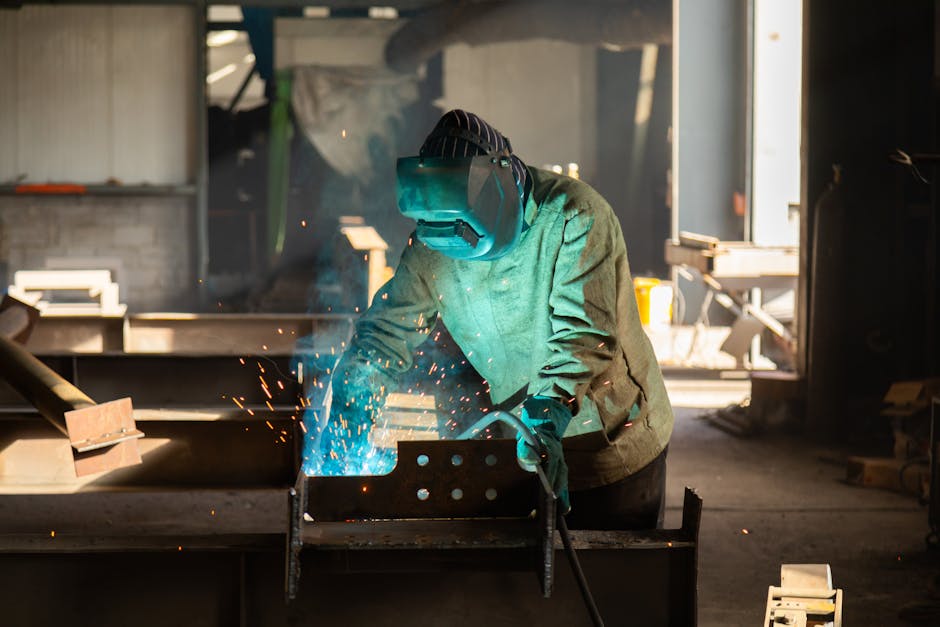 Photo by Collab Media on Pexels
Duty cycle and a stable arc separate a trade MIG welder from a DIY one. Cheap transformer MIGs run hot and cut out mid-weld; modern inverter sets like the R-Tech and Parweld hold a smooth arc, weigh a third as much, and many add synergic control that sets voltage and wire speed for you. For UK workshops, investing in an inverter-based welder between £500 and £1,200 can make daily tasks smoother and more efficient, reducing downtime and improving quality. These machines cater to the demands of professional use with features such as four-burner torches, spool guns for aluminium welding, and digital displays that offer precise control over settings. In a busy workshop, reliability and performance are non-negotiable - choosing the right MIG welder means opting for durability and versatility in your equipment lineup.
How we picked these
- Amperage: 130-150A handles up to ~5mm steel for most fabrication; 180-210A for thicker section and faster fill.
- Duty cycle: the % of a 10-minute period you can weld at a given amperage. Trade work wants 30%+ at working amps, not just at minimum.
- Gas vs gasless: gas (Ar/CO2) gives cleaner welds; gasless flux-core suits outdoor/windy work but spatters more.
- Inverter vs transformer: inverters are lighter, more efficient and give a more stable arc; transformer sets are heavier and cruder.
- Synergic control: the machine sets voltage/wire-speed from material thickness - faster setup and fewer bad welds for less experienced users.
Reviewed picks
Sealey MightyMIG150
Price: £200-£300 | Best for: occasional DIY and light fabrication
The Sealey MightyMIG150 is a solid choice for infrequent DIY welders or light fabrication tasks, priced around £250. It offers versatility with both gas and gasless options and is easy to operate. However, its 10% duty cycle means it struggles during prolonged welding sessions. Weigh the benefits against its heavy transformer design and lack of synergic technology.
| Output | 20-150A |
|---|
| Type | Transformer, gas/gasless |
|---|
| Duty cycle | 10% @ 150A |
|---|
| Phase | 230V single |
|---|
| Wire | 0.6-0.8mm |
|---|
Pros
- Affordable, widely stocked
- Gas and gasless capable
- Simple to run
Cons
- Low duty cycle - cuts out on long welds
- Heavy transformer, no synergic
As an Amazon Associate, My Local Components earns from qualifying purchases.
Check Sealey MightyMIG150 on Amazon UK →
Clarke MIG151TE
Price: £250-£350 | Best for: value gas MIG for the home workshop
The Clarke MIG151TE is a solid choice for UK home workshops on a budget, priced at around £250 to £350. It offers a reliable transformer output of 30-150A with turbo-fan cooling, ideal for body and bracket work. However, its manual voltage adjustment can be fiddly, and the transformer is quite heavy.
| Output | 30-150A |
|---|
| Type | Transformer, gas |
|---|
| Duty cycle | ~15% @ 150A |
|---|
| Phase | 230V single |
|---|
| Wire | 0.6-0.8mm |
|---|
Pros
- Turbo-fan cooled
- Machine Mart UK support
- Good for body and bracket work
Cons
- Transformer weight
- Manual voltage steps only
Check Clarke MIG151TE on Amazon UK →
Draper 230V Gas/Gasless MIG (160A)
Price: £250-£380 | Best for: lightweight gas/gasless flexibility
The Draper 230V Gas/Gasless MIG (160A) is a solid choice for UK workshops on a budget, priced between £250 and £380. Its inverter technology makes it lightweight and portable, ideal for those needing flexibility with both gas and flux-core welding. However, its 20% duty cycle at 160A limits prolonged use, and the basic controls might not suit advanced users.
| Output | to 160A |
|---|
| Type | Inverter, gas/gasless |
|---|
| Duty cycle | ~20% @ 160A |
|---|
| Phase | 230V single |
|---|
| Wire | 0.6-0.9mm |
|---|
Pros
- Inverter - lighter and portable
- Runs gas or flux-core
- Reasonable price
Cons
- Mid duty cycle
- Basic controls
Check Draper 230V Gas/Gasless MIG (160A) on Amazon UK →
R-Tech MIG180 (synergic inverter)
Price: £500-£650 | Best for: best all-round trade-grade inverter
The R-Tech MIG180 is a solid choice for UK tradespeople with its inverter technology and synergic control setting parameters effortlessly. Offering an output of 30-180A on single-phase 230V, it delivers a smooth arc suitable for most workshop needs. At £500 to £650, it’s well-supported with a UK warranty but hits its limit on thick plate welding above the £500 mark due to single-phase constraints.
| Output | 30-180A |
|---|
| Type | Inverter, synergic |
|---|
| Duty cycle | 30% @ 180A |
|---|
| Phase | 230V single |
|---|
| Wire | 0.6-1.0mm |
|---|
Pros
- Synergic control sets the parameters
- Smooth stable arc
- UK warranty and support
Cons
- Above £500
- Single-phase amp limit on thick plate
Check R-Tech MIG180 (synergic inverter) on Amazon UK →
Parweld XTM 211di (211A, dual)
Price: £700-£950 | Best for: professional fabrication and thicker steel
The Parweld XTM 211di (211A, dual) is a top-tier MIG welder for professionals working with thicker steel, priced between £700 and £950. It boasts high output on single phase and synergic plus MMA capabilities, making it ideal for fabrication shops. However, its hefty price tag might be overkill for those using a MIG welder only occasionally.
| Output | to 211A |
|---|
| Type | Inverter, synergic MIG/MMA |
|---|
| Duty cycle | 30%+ @ high amps |
|---|
| Phase | 230V single |
|---|
| Wire | 0.6-1.0mm |
|---|
Pros
- High output for single phase
- Synergic + MMA capability
- Trade-grade components
Cons
- Highest price here
- Overkill for occasional use
Check Parweld XTM 211di (211A, dual) on Amazon UK →
Recommendations at a glance
| Best overall (trade) | R-Tech MIG180 - synergic inverter, 30% duty, UK support |
|---|
| Best professional | Parweld XTM 211di - high output, MIG + MMA |
|---|
| Best lightweight value | Draper inverter MIG - gas/gasless and portable |
|---|
| Best value gas MIG | Clarke MIG151TE - solid home-workshop gas set |
|---|
| Best budget | Sealey MightyMIG150 - cheapest gas/gasless entry |
|---|
Related reference on MLC
Frequently asked questions
What amperage MIG welder do I need?
For general fabrication up to ~5mm steel, 130-160A is enough. For regular work on 6mm+ section, faster fill, or trailer/structural work, choose 180-210A (R-Tech MIG180, Parweld XTM 211di). Single-phase 230V machines top out around 200-210A.
What does duty cycle mean on a welder?
Duty cycle is the share of a 10-minute period you can weld continuously at a stated amperage before the machine must cool. 30% at 180A means 3 minutes welding, 7 cooling. Cheap sets quote duty cycle at low amps; check it at your working amperage, where budget transformer MIGs often cut out.
Gas or gasless MIG?
Gas (argon/CO2 mix) gives cleaner, lower-spatter welds and is better indoors - the workshop standard. Gasless (flux-cored wire) needs no bottle and tolerates wind, so it suits outdoor and site work, but it spatters more and looks rougher. Many machines do both.
Is a synergic MIG welder worth it?
For less experienced welders, yes. Synergic control sets voltage and wire speed from the material thickness you dial in, so you get a usable weld without manually balancing both. The R-Tech MIG180 and Parweld XTM 211di are synergic; it speeds setup and reduces bad welds.
Inverter or transformer MIG?
Inverter sets are lighter, more energy efficient and give a more stable, adjustable arc - and they're now affordable. Transformer machines (Sealey, Clarke) are cheaper and robust but heavy and cruder. For new buyers, an inverter is usually the better long-term choice.
As an Amazon Associate, MLC earns from qualifying purchases. The product links on this page support our work at no extra cost to you. Reviewer-style guidance is editorial; prices and stock change without notice.