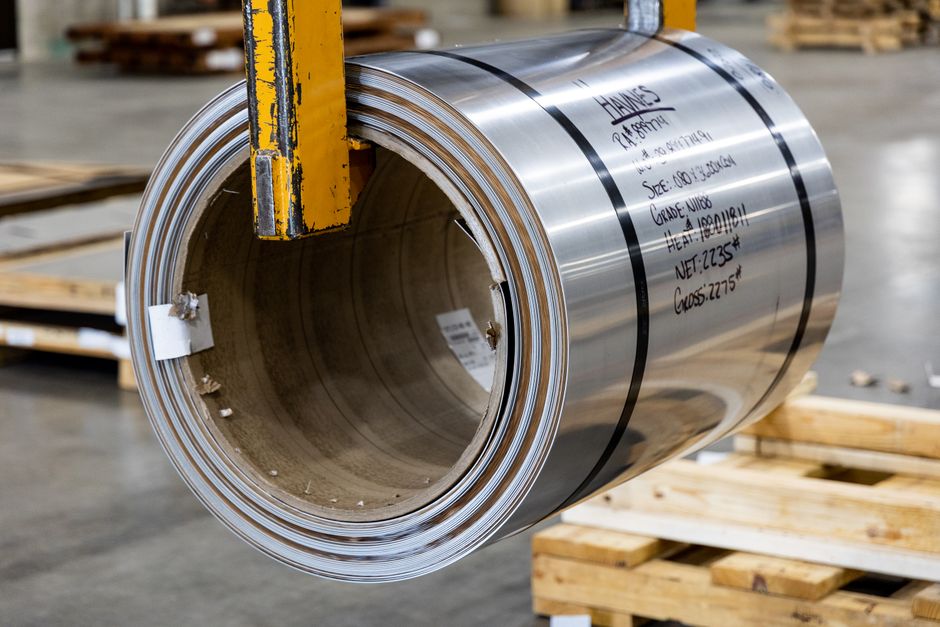
 Photo by Rolled Alloys Specialty Metal Supplier on Pexels
| Specification | Details |
|---|
| Metals | Mild steel, stainless (304/316), aluminium (6061/6082), brass (CZ121), copper, titanium |
| Plastics | Nylon (PA6/PA66), acetal (POM), PTFE, PEEK, polycarbonate, PVC |
| Forms | Bar, sheet, plate, tube, angle, channel, flat, hexagonal |
| Standards | BS EN 10025 (structural steel), BS EN 573 (aluminium), BS EN 10088 (stainless) |
What are Engineering Materials?
Engineering materials refer to materials used in manufacturing and construction for their strength, durability, and ability to withstand various environmental conditions. These materials include metals like mild steel, stainless steel (A2-70), aluminium (EN-AW-6082-T6), brass (CZ121), copper, titanium, and plastics such as nylon (PA6/PA66), acetal (POM), PTFE, PEEK, polycarbonate, PVC. Each material has specific properties that make it suitable for particular applications.
Types of Engineering Materials
Engineering materials come in various types with unique characteristics:
- Metals: Mild steel offers good strength and formability at an affordable price point. Stainless steel variants like A2-70 provide corrosion resistance but are more expensive. Aluminium grades such as EN-AW-6082-T6 offer a good balance between weight and strength, making them ideal for aerospace applications.
- Plastics: Nylon (PA6/PA66) is cost-effective with high abrasion resistance. Acetal (POM) provides excellent mechanical properties at elevated temperatures but can be more expensive than nylon. PTFE excels in chemical resistance and low friction, while PEEK offers exceptional mechanical strength and thermal stability.
Materials and Specifications
Engineering materials adhere to specific standards for quality control:
- Mild Steel: Follows BS EN 10025:2019, ensuring consistent material properties across different suppliers.
- Stainless Steel: Adheres to BS EN 10088, which outlines requirements for grades like A2-70 and ensures corrosion resistance and durability.
- Aluminium: Complies with BS EN 573, providing guidelines on mechanical properties, chemical composition, and quality assurance.
How to Choose the Right Engineering Materials
Selecting the right engineering material involves considering application-specific needs:
- Strength Requirements: Mild steel is suitable for structural applications requiring high formability. Stainless steel A2-70 offers better corrosion resistance but at a higher cost.
- Weight Considerations: Aluminium EN-AW-6082-T6 reduces weight without compromising strength, making it ideal for aerospace and automotive components.
UK Suppliers
MLC lists verified suppliers from Companies House that meet stringent quality standards. These suppliers ensure that materials adhere to BS and ISO specifications, providing procurement managers with reliable options.
Common Applications
Engineering materials find extensive use in diverse industries:
- Structural Steel: Used in construction for load-bearing beams, columns, and frames.
- Stainless Steel: Applied in food processing equipment, medical instruments, and chemical plants due to its resistance to corrosion.
- Aluminium: Employed in aircraft parts, bicycle frames, and electronic enclosures because of its lightweight nature.
Plastics also serve various purposes:
- Nylon (PA6/PA66): Utilized in automotive parts, gears, and mechanical components for its durability and wear resistance.
- Acetal (POM): Commonly used in precision-machined parts requiring high stiffness and low friction coefficients.
By understanding the properties and applications of these materials, engineers can make informed decisions that balance performance with cost-effectiveness.
Profiled UK engineering materials suppliers
MLC lists 100 verified engineering materials suppliers, each cross-referenced against Companies House public records.
| Company | Company No. | Incorporated | Status |
|---|
| Guru Nanak Aerospace Uk Ltd | 12348300 | 2019-12-04 | Active |
| Geoturn Limited | SC101558 | 1986-10-28 | Dissolved |
| Amc Engineering Limited | SC115040 | 1988-12-09 | Dissolved |
| Brown Engineering (Fochabers) Limited | SC133946 | 1991-09-10 | Dissolved |
| Wally & Sow Ltd | 12948118 | 2020-10-13 | Dissolved |
| The Black Dog And Company Limited | 07086833 | 2009-11-25 | Dissolved |
| Sas Formworking Ltd | 07367005 | 2010-09-06 | Dissolved |
| Mg Bodyshop Ltd | 10424755 | 2016-10-13 | Dissolved |
| Sdf Automotive Limited | 10458615 | 2016-11-02 | Dissolved |
| Wide Plains Ltd | 10687716 | 2017-03-23 | Dissolved |
Plus 90 more verified suppliers. Browse the full list on MLC.
Companies sourced from Companies House SIC codes: 25500, 25610, 25620. Data verified April 2026.
UK trade in engineering materials, 2025
The UK imported £953.5 million of engineering materials in 2025, 1,464 thousand tonnes by weight, and exported £122.6 million. £516.2 million of imports came from the EU and £437.3 million from outside it. Figures are compiled from HM Revenue & Customs Overseas Trade Statistics across 4 commodity headings, covering all four HMRC trade flows (HMRC UK Trade Info).
Largest sources of imports:
| Country | Import value | Share |
|---|
| France | £147.0 million | 15.4% |
| Turkey | £117.2 million | 12.3% |
| Netherlands | £102.8 million | 10.8% |
| Germany | £89.4 million | 9.4% |
| South Korea | £83.8 million | 8.8% |
| Vietnam | £68.0 million | 7.1% |
Named countries account for 99% of import value; the remainder is spread across smaller partners.
By commodity heading:
- 721049 — Flat-rolled products of iron or non-alloy steel, of a width of >= 600 mm, hot-rolled or cold-ro: £490.3 million
- 720839 — Flat-rolled products of iron or non-alloy steel, of a width of >= 600 mm, in coils, simply hot-: £181.6 million
- 721420 — Bars and rods, of iron or non-alloy steel, with indentations, ribs, groves or other deformation: £176.8 million
- 760421 — Hollow profiles of aluminium alloys, n.e.s.: £104.8 million
Contains public sector information licensed under the Open Government Licence v3.0. Full dataset: uk-engineering-component-trade.
Frequently Asked Questions
What types of Engineering Materials are available in the UK?
Engineering Materials are available from hundreds of UK suppliers in various materials, sizes, and specifications. Browse MLC's verified supplier listings for current stock and technical specs.
How do I choose the right Engineering Materials?
Selecting the right Engineering Materials depends on load requirements, operating environment, temperature range, and material compatibility. Check our buying guides for detailed selection criteria.
Can I buy Engineering Materials in small quantities?
Many UK Engineering Materials suppliers offer no minimum order quantities. Filter suppliers on MLC to find those selling individual items or small batches.
Are Engineering Materials suppliers on MLC verified?
All suppliers listed on MLC are verified against Companies House public records. Each listing shows incorporation date, company status, directors, and registered address.
What standards apply to Engineering Materials?
Engineering Materials are manufactured to various ISO, BS, and DIN standards depending on type and application. Check individual product pages for specific standard references.
What are the most common types of metals used in Engineering Materials according to mlc.org.uk?
The most common types of metals in Engineering Materials include mild steel, stainless steel grades such as 304 and 316, aluminium alloys like 6061 and 6082, brass CZ121, copper, and titanium.
How do engineers choose between different plastic materials for Engineering Materials applications?
Engineers select plastics based on their specific application needs. Nylon (PA6/PA66), acetal (POM), PTFE, PEEK, polycarbonate, and PVC are chosen for properties such as strength, flexibility, resistance to chemicals, or ease of processing.
What standards should be considered when selecting metals in Engineering Materials?
When choosing metals for Engineering Materials applications, engineers should consider standards like BS EN 10025 for structural steel, BS EN 573 for aluminium, and BS EN 10088 for stainless steel grades to ensure compliance with quality and safety requirements.
What forms do Engineering Materials come in according to mlc.org.uk?
Engineering Materials can be found in various forms such as bar, sheet, plate, tube, angle, channel, flat, and hexagonal shapes, providing flexibility in manufacturing and construction applications.
Where can UK engineers find suppliers for common Engineering Materials listed on mlc.org.uk?
UK engineers can source materials from a variety of suppliers that stock the metals and plastics detailed on mlc.org.uk. For example, structural steel is often available from companies adhering to BS EN 10025 standards, while aluminium forms conform to BS EN 573 specifications.