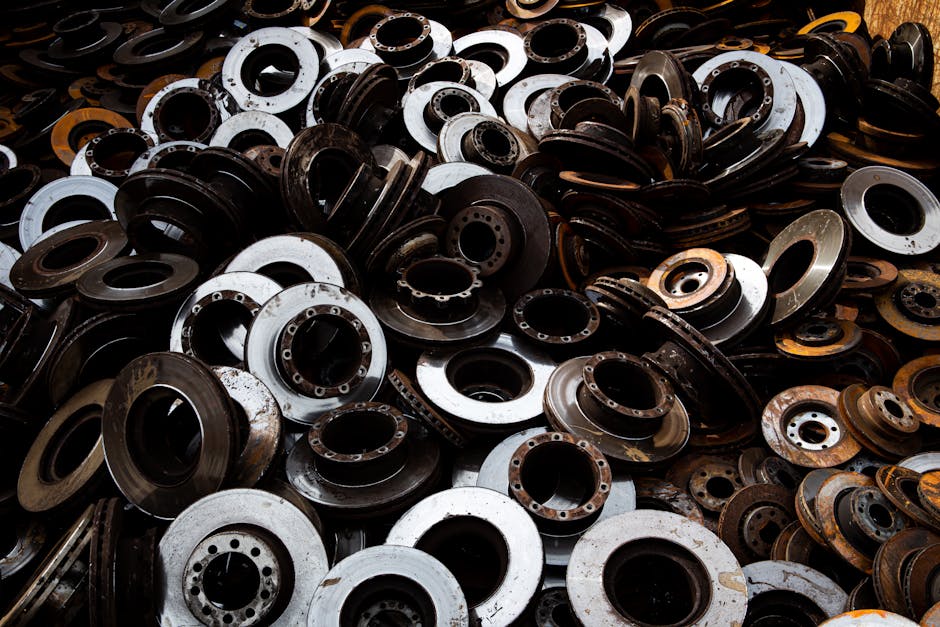
 Photo by Alex Tepetidis on Pexels
| Specification | Details |
|---|
| Types | Series A (small deflection, high force), B (medium), C (large deflection) |
| Standards | DIN 2093, BS 1898 |
| Materials | 50CrV4 spring steel, stainless steel |
| Stacking | Parallel (multiply force), series (multiply deflection) |
What are Disc Springs?
Disc Springs are conical washers that store and release energy when compressed or expanded. Disc Springs provides precise force control in a compact space and come in various types suited for different applications.
Types and Variants
Series A disc springs offer small deflection but deliver high force, making them ideal for safety lockouts or brake systems. Series B provides medium deflection and moderate force, suitable for clamping devices or valve actuators. Series C features large deflection with lower force, commonly used in mechanical buffers or dampers.
Dimensions:
- Series A: Outer diameter (OD) 10mm to 50mm, thickness range from 2mm to 8mm.
- Series B: OD 30mm to 160mm, thickness range from 4mm to 20mm.
- Series C: OD 70mm to 400mm, thickness range from 5mm to 30mm.
Materials and Specifications
Disc Springs are typically made of materials like 50CrV4 spring steel or stainless steel, adhering to standards such as DIN 2093 and BS 1898. Stainless steel grades include A2-70 and EN8 carbon steel. These materials ensure durability and resistance in various environments.
Specifications:
- Series A: Load capacity ranges from 50N to 4kN, with a maximum operating temperature of 450°C.
- Series B: Load capacity varies between 200N and 16kN, suitable for temperatures up to 375°C.
- Series C: Offers load capacities from 800N to 120kN, with a maximum temperature of 400°C.
Selection Criteria
Choosing the right disc spring involves evaluating application requirements such as force and deflection needs, operating environment conditions like temperatures and pressures. Consider stacking configurations-parallel for increased force or series for greater deflection-to meet specific load demands accurately.
Key Points:
- Force Requirements: Determine the required preload and maximum load.
- Temperature Range: Select materials based on expected temperature ranges.
- Pressure Resistance: Ensure material compatibility with environmental pressures.
UK Suppliers
MLC lists verified suppliers from Companies House that offer a range of disc springs, including those meeting DIN 2093 and BS 1898 standards. These suppliers provide products in various materials like 50CrV4 spring steel or stainless steel A2-70. They can cater to bespoke requirements too.
Example Suppliers:
- BTMA Member XYZ Springs Ltd: Specialises in high-quality disc springs for industrial use.
- BIAFD Member ABC Spring Solutions: Offers a wide range of standard and customised disc springs.
Common Applications
Disc Springs find applications across various industries, including automotive (clutch assemblies), aerospace (actuator mechanisms), and machinery manufacturing (vibration dampers). They're also used in safety systems like brake release devices or emergency stop switches due to their reliable force control capabilities.
Specific Uses:
- Automotive: Clamping washers for engine mounts.
- Aerospace: Actuator springs for landing gear.
- Manufacturing: Shock absorbers in machinery to prevent damage during transport.
By understanding the specific needs of your application, you can select the appropriate disc spring type and material from reputable UK suppliers to ensure optimal performance.
Profiled UK Suppliers
| Company | Company No. | Location |
|---|
| Eco Electric Limited | 05243358 | Unit 3 D, Betton Way, Moreton Hampstead, Devon, TQ |
| Kato-Entex Limited | 02853659 | Glaisdale Drive, Bilborough, Nottingham, NG8 4JY |
| Fb Chain Limited | 01958761 | C/O F B Chain Ltd, Works Road, Letchworth Garden C |
| Springmasters (Scotland) Limited | SC081565 | Unit 95, 44/46 Morningside Road, Edinburgh, EH10 4 |
| Gold Bros. Limited | 02592331 | 336a Regents Park Road, Finchley, London, N3 2LN |
Frequently Asked Questions
Where can I buy Disc Springs in the UK?
MLC lists verified UK disc springs suppliers with Companies House data. Browse by product category or search by location.
What are Disc Springs used for in engineering applications?
Disc Springs are used to store and release energy efficiently, providing precise force control in compact spaces. They're ideal for safety lockouts, brake systems, clamping devices, valve actuators, mechanical buffers, and dampers.
How do I choose between Series A, B, and C Disc Springs?
Choose Series A Disc Springs for applications requiring small deflection but high force, such as safety lockouts or brakes. For medium deflection and moderate force in clamping devices or valve actuators, select Series B. Use Series C for large deflection with lower force, commonly found in mechanical buffers or dampers.
What are the standards that Disc Springs conform to?
Disc Springs adhere to international standards such as DIN 2093 and BS 1898, ensuring consistent quality and performance across different manufacturers.
Which materials are typically used for manufacturing Disc Springs?
Disc Springs are commonly made from high-quality materials like 50CrV4 spring steel or stainless steel, providing durability and resistance to corrosion.
How can I stack Disc Springs to achieve the desired force or deflection?
To multiply force in your application, stack Disc Springs in parallel. For increasing the total deflection, stack them in series configuration.
Where can UK engineers find reliable suppliers for Disc Springs?
Reliable suppliers of Disc Springs for UK engineers include manufacturers and distributors that comply with DIN 2093 or BS 1898 standards, ensuring quality products suitable for various industrial applications.
What factors influence the cost and availability of Disc Springs in the UK market?
The cost and availability of Disc Springs are influenced by material choice, size specifications (OD ranging from 10mm to 50mm), thickness range, and demand fluctuations within the supply chain network.
How do I determine the correct dimensions for a specific application when selecting Disc Springs?
When choosing the right dimensions for your application, consider the required force level and deflection requirements. Series A offers an outer diameter (OD) from 10mm to 50mm with thickness ranging from 2mm to 8mm, suitable for applications needing high force in a compact space.