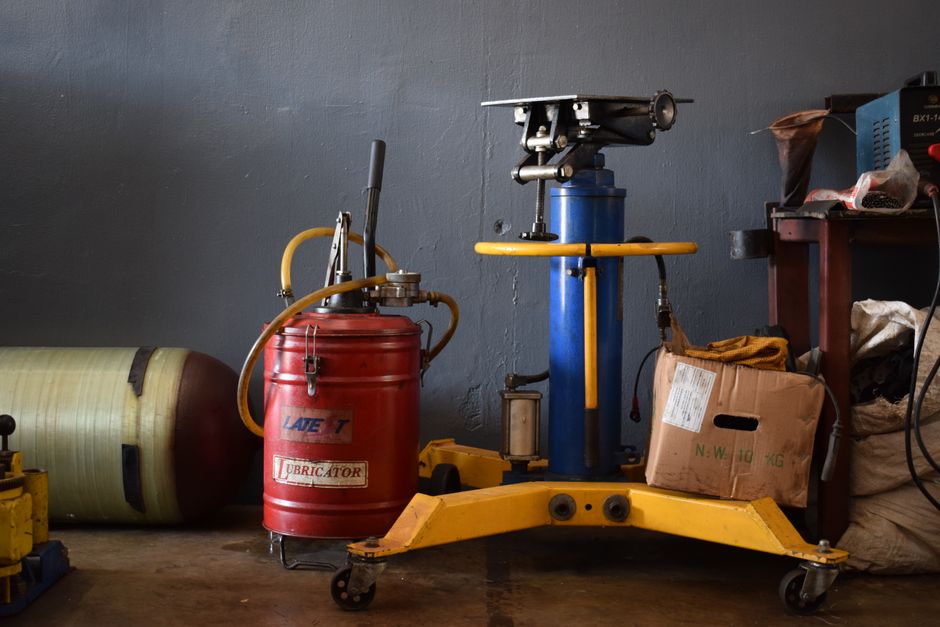
 Photo by Ayub Abdul Rahman on Pexels
| Specification | Details |
|---|
| Types | Greases (lithium/synthetic/food-grade), oils (hydraulic/gear/cutting), sprays, pastes |
| Standards | ISO 6743 (lubricant classification), NLGI grades (grease consistency), ISO VG (oil viscosity) |
| Brands | SKF, Castrol, Shell, Fuchs, Kluber, Molykote, WD-40 |
| Temperature range | -40C to +250C depending on formulation |
What are Lubrication?
Lubrication refers to the application of substances like oils and greases to reduce friction between moving parts in machinery and equipment. Proper lubrication is important for minimizing wear, extending component life, and maintaining system efficiency.
Types of Lubrication
Lubrication comes in several forms tailored to different needs:
- Greases: Consist of a base oil thickened with a stabilizing agent like lithium soap or urea. Greases vary widely in consistency and temperature range. For instance, SKF greases include options for high-speed ball bearings (NLGI grade 2) and extreme low-temperature applications (-60°C).
- Oils: Classified according to ISO standards such as ISO 6743, these oils are used in hydraulic systems, gearboxes, and cutting processes. For example, Castrol's Hyspin X1 series is an anti-wear industrial oil suitable for hydraulic equipment.
- Sprays: Quick-dry lubricants like WD-40 Multi-Use Lubricant offer easy application and protection against rust and corrosion. Kluber offers specialized sprays designed for specific industries like electronics or automotive.
- Pastes: High-viscosity greases often used in heavily loaded bearings, gears, and splines to prevent metal-to-metal contact.
Materials and Specifications
Lubricants are specified using international standards:
- ISO 6743/ISO VG: These codes classify oils based on viscosity. For instance, ISO 100VG oil is suitable for gearboxes requiring medium lubrication at operating temperatures up to +85°C. - NLGI Grades (Grease Consistency): Greases are graded by their consistency using the National Lubricating Grease Institute (NLGI) system. A2 greases, such as those from Fuchs, are typically used for high-speed applications due to their low-pour point and smooth texture. - Materials: Common materials include synthetic oils like PAO (polyalphaolefin) and PAG (polyalkylene glycol). Which offer superior thermal stability compared to mineral oils. Food-grade lubricants must meet FDA standards, such as NSF H1 certification for incidental food contact.
How to Choose the Right Lubrication
Selecting the right lubricant involves considering several factors:
- Operating Conditions: Temperature range and load conditions dictate the type of base oil and additives needed.
- Component Type: Different mechanical components require specific types of lubricants. For instance, gears need oils with high viscosity index (VI) to maintain consistent film thickness across a wide temperature range.
- Environment: Consider whether the equipment will be exposed to water or dust, which can affect lubricant performance and longevity.
UK Suppliers
MLC lists verified suppliers from Companies House for procurement managers seeking reliable sources of Lubrication. Some reputable brands include Castrol, Shell, and Kluber, all available through MLC's reference. These suppliers adhere to industry standards set by bodies like the British and Irish Association of Fastener Distributors (BIAFD) and the British Lubricating Oil Distributors Association (BLODA).
Common Applications
Lubrication is widely used across various industries:
- Manufacturing: Cutting fluids, gear oils, and hydraulic oils are important for machinery in automotive and aerospace manufacturing.
- Construction: Heavy equipment like excavators rely on high-viscosity greases to protect bearings under extreme loads and temperatures. Shell's Spirax series offers protection against wear and corrosion.
- Automotive: Engine oils (e.g., Castrol EDGE) provide critical lubrication to pistons, crankshafts, and other engine components. These oils must meet stringent performance requirements set by organizations like the Society of Automotive Engineers (SAE).
Proper Lubrication ensures optimal performance, reduces downtime, and extends equipment lifespan in diverse industrial settings.
UK trade in lubrication, 2025
The UK imported £101.9 million of lubrication in 2025, 24 thousand tonnes by weight, and exported £123.1 million. £93.9 million of imports came from the EU and £8.0 million from outside it. Figures are compiled from HM Revenue & Customs Overseas Trade Statistics across 2 commodity headings, covering all four HMRC trade flows (HMRC UK Trade Info).
Largest sources of imports:
| Country | Import value | Share |
|---|
| Belgium | £29.6 million | 29.0% |
| Germany | £27.7 million | 27.2% |
| Netherlands | £20.0 million | 19.6% |
| France | £9.5 million | 9.3% |
| United States | £4.5 million | 4.4% |
| Switzerland | £2.8 million | 2.7% |
Named countries account for 100% of import value; the remainder is spread across smaller partners.
By commodity heading:
- 340319 — Lubricant preparations, incl. cutting-oil preparations, bolt or nut release preparations, anti-: £100.6 million
- 340311 — Textile lubricant preparations and preparations of a kind used for the oil or grease treatment : £1.3 million
Contains public sector information licensed under the Open Government Licence v3.0. Full dataset: uk-engineering-component-trade.
Frequently Asked Questions
What types of Lubrication are available in the UK?
Lubrication are available from hundreds of UK suppliers in various materials, sizes, and specifications. Browse MLC's verified supplier listings for current stock and technical specs.
How do I choose the right Lubrication?
Selecting the right Lubrication depends on load requirements, operating environment, temperature range, and material compatibility. Check our buying guides for detailed selection criteria.
Can I buy Lubrication in small quantities?
Many UK Lubrication suppliers offer no minimum order quantities. Filter suppliers on MLC to find those selling individual items or small batches.
Are Lubrication suppliers on MLC verified?
All suppliers listed on MLC are verified against Companies House public records. Each listing shows incorporation date, company status, directors, and registered address.
What standards apply to Lubrication?
Lubrication are manufactured to various ISO, BS, and DIN standards depending on type and application. Check individual product pages for specific standard references.
What are the main types of lubrication used in industrial settings?
Lubrication primarily comes in forms like greases and oils. Greases include lithium, synthetic, and food-grade varieties, while oils cover hydraulic, gear, and cutting applications.
How do you determine the appropriate viscosity grade for an oil-based lubricant?
The ISO VG (Viscosity Grade) standard is used to select the right oil viscosity based on operating temperature and equipment requirements. For instance, a lower ISO VG number is suitable for colder conditions or high-speed machinery.
What are some well-known brands of lubrication products in the UK?
Popular brands include SKF, Castrol, Shell, Fuchs, Kluber, Molykote, and WD-40. These companies offer a range of lubricants designed to meet various industrial needs.
How do you choose between grease and oil for a specific application?
The decision depends on factors such as operating temperature range, environmental conditions, and the need for frequent reapplication. Greases are typically preferred in areas where oils might leak or in high-temperature applications, while oils are better suited for situations requiring easy circulation through complex systems.
What is the typical cost and availability of lubrication products in the UK market?
Lubrication products vary widely in price depending on brand, type (oil or grease), and quantity. Common brands like Castrol and Shell are readily available from industrial supply chains across the UK.