Photo by Marcelo Avila on Pexels
Specification Details Types Deep groove, angular contact, self-aligning, miniature Materials Chrome steel 52100, stainless 440C, ceramic Si3N4 hybrid Standards ISO 15 , ISO 492Common sizes 600 series (608-699), 6000 series (6000-6210), 6200 series, 6300 series
Ball Bearings are precision-engineered components that reduce rotational friction and support radial and axial loads in mechanical systems.
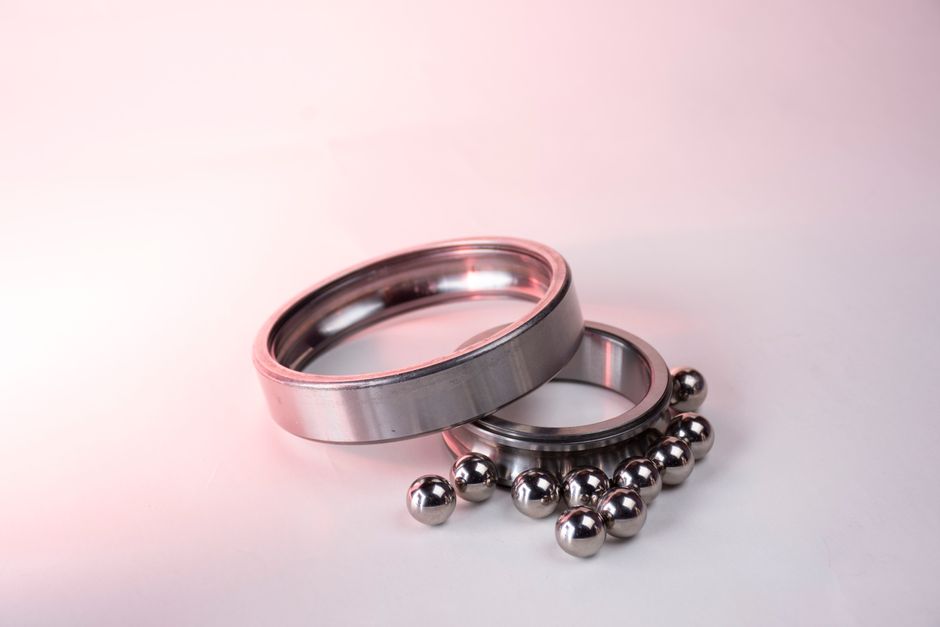
Ball Bearings consist of inner and outer races with balls rolling between them. The design minimizes wear and tear, enhancing equipment longevity and performance. These bearings come in various types suited for different applications, including deep groove, angular contact, self-aligning, and miniature varieties.
Types and Variants
Deep Groove Ball Bearings
Series: 608-699 (e.g., 6207)Materials: Chrome steel 52100, stainless steel 440CStandard: ISO 15Applications: Electric motors, gearboxes, roller skatesAngular Contact Ball Bearings
Series: 7000 series (e.g., 7316B)Materials: Chrome steel 52100, ceramic Si3N4 hybridStandard: ISO 492Applications: Tapered roller bearings for high axial loads in transmissions and gearboxesSelf-aligning Ball Bearings
Series: 200 series (e.g., 22212)Materials: Chrome steel 52100, stainless steel A4 material gradeStandard: ISO 355Applications: Applications where shaft misalignment can occur, such as in roller bearings and spherical plain bearingsMiniature Ball Bearings
Series: 68 series (e.g., 6807)Materials: Chrome steel 52100, stainless steel A4 material gradeStandard: ISO 15Applications: Precision machinery like watches and medical devicesMaterials and Specifications
Ball Bearings use high-strength materials to withstand various loads and environmental conditions.
Chrome Steel (AISI 52100)
Composition: Carbon content of 1% and chromium up to 1.5%Standard: ASTM A29Characteristics: High hardness, wear resistance, and fatigue strengthStainless Steel (440C)
Composition: Chromium content up to 17%, carbon content of 1.0% Standard: EN ISO 683-17:2020Characteristics: Corrosion-resistant, suitable for harsh environments like marine and chemical processingCeramic (Si3N4)
Composition: Silicon nitride ceramic hybridStandard: ANSI/ABMA STJ9.5-2016Characteristics: Low coefficient of friction, high stiffness, lighter than steel counterpartsSelection Criteria
Choosing the right Ball Bearing involves considering several factors:
Load Capacity and Speed
Determine the radial and axial loads your application will endure and select bearings that match these requirements.
Operating Environment
Consider temperature ranges (typically -40°C to 120°C) and exposure to corrosive elements. Stainless steel or ceramic options offer enhanced corrosion resistance.
Precision Requirements
Miniature ball bearings are ideal for high-precision applications like medical devices, while larger deep groove types suit heavy machinery.
UK Suppliers
MLC lists verified Ball Bearing suppliers from Companies House, ensuring reliability and quality.
Common Applications
Ball Bearings find use in numerous industries:
Automotive
Applications: Wheel hubs, transmission systems (ISO 683-17:2020)Materials: Chrome steel 52100 for durability under extreme conditionsIndustrial Machinery
Applications: Gearboxes, conveyors (ISO 492)Materials: Stainless steel A4 for food processing equipment exposed to moisture and chemicalsConsumer Electronics
Applications: Small motors in kitchen appliances, fansMaterials: Ceramic Si3N4 hybrid for low friction and reduced weightAerospace
Applications: Precision instruments, navigation systems (ISO 15)Materials: High-grade chrome steel 52100 for reliability under high stressProfiled UK Suppliers Company Company No. Location Springco (N.I.) Limited NI003360 21 Carn Road, Carn Industrial Estate, Portadown, B Dana Sac Uk Limited 02069720 Bridgeway House, Bridgeway, Stratford Upon Avon, C Dte International Limited 09962928 Bramley House, Bath Lane, Leeds, LS13 3BB Darpol Logistics Ltd 11264963 427-431 London Road, Sheffield , South Yorkshire, S D & M Engineering Limited 02706103 Chancery House, 3 Hatchlands Road, Redhill, Surrey
Need ball bearings for production or maintenance? Get a UK price from Acumen Seals & Pumps - 36 years supplying UK industry, OEM and production quantities welcome.
Get a quote for Ball Bearings
Acumen Seals & Pumps - UK specialist in mechanical seals, FFKM O-rings, Kalrez compounds, and elastomer parts. 36 years of inventory, UK stock with 24-48 hour despatch, and a price back within 4 working hours.
Frequently Asked Questions Where can I buy Ball Bearings in the UK? MLC lists verified UK ball bearings suppliers with Companies House data. Browse by product category or search by location.
What types of Ball Bearings are commonly used in the UK? Common types include deep groove, angular contact, self-aligning, and miniature ball bearings. Deep groove ball bearings, for example, come in series like 608-699 and support a wide range of applications from electric motors to roller skates.
How do you choose the right type of Ball Bearing? The choice depends on the application's load requirements, speed, and environmental conditions. For instance, deep groove ball bearings are suitable for high-speed operations due to their design efficiency, while angular contact ball bearings are better suited for applications with axial loads.
What materials are used in Ball Bearings? Common materials include chrome steel 52100, stainless steel 440C, and ceramic Si3N4 hybrid. Chrome steel is widely used due to its high wear resistance and durability, while stainless steel provides corrosion resistance for harsh environments.
What standards apply to Ball Bearings in the UK? Ball Bearings adhere to international standards such as ISO 15 and ISO 492. These standards ensure uniform quality and performance across different manufacturers and applications.
Where can I find reliable suppliers of Ball Bearings in the UK? Many reputable UK companies supply ball bearings, including MLC (mlc.org.uk) which offers a wide range of products compliant with industry standards such as ISO 15. Checking their inventory for your specific needs is advisable.
What are common sizes available for Ball Bearings? Common sizes include the 608-699 series and 6200, 6300 series ball bearings. These sizes cover a wide range of applications from small electric motors to larger industrial machinery.
How do costs vary among different types of Ball Bearings in the UK market? Costs can vary significantly based on material quality, size, and type. For example, ceramic hybrid ball bearings tend to be more expensive than standard steel versions due to their superior performance characteristics like lower friction and higher speed capabilities.