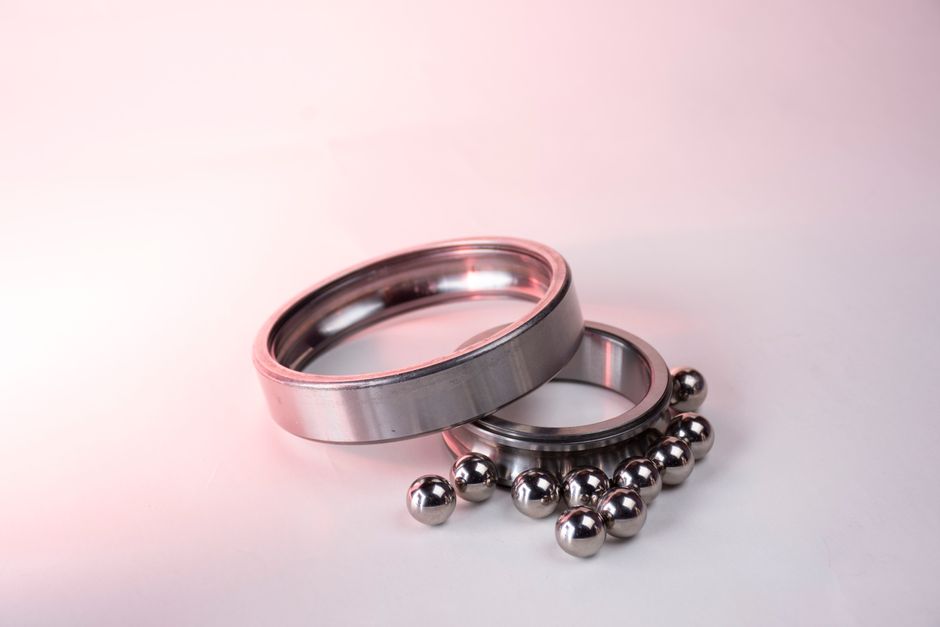
Photo by Marcelo Avila on Pexels
Specification Details Types Cylindrical (NU, NJ, NUP), taper (30200-30300), spherical (22200-22300), needle Standards ISO 355, ISO 492 Materials Chrome steel 52100, case-hardened steel
What are Roller Bearings ?
Roller Bearings are precision-engineered components that support rotating shafts and reduce friction between moving parts. They come in various types designed for different loads, speeds, and operating environments.
Types and Variants
Roller Bearings include cylindrical (NU, NJ, NUP), taper (30200-30300), spherical (22200-22300), and needle bearings. Each type has unique characteristics suited to specific applications:
Cylindrical Roller Bearings : NU series with bore diameters ranging from 10mm to 800mm, suitable for heavy radial loads.Tapered Roller Bearings : 30200-30300 series offers a wide range of bore sizes from 10mm to 395mm, ideal for combined radial and thrust loads in automotive applications.Spherical Roller Bearings : 22200-22300 series handles axial and radial forces with bores ranging from 30mm to 360mm, making them suitable for heavy-duty industrial machinery.Needle Bearings : These have a high load-carrying capacity in compact spaces, with bore sizes typically between 5mm and 127mm.Materials and Specifications
Roller Bearings are made from materials like chrome steel (52100) and case-hardened steel. They adhere to international standards such as ISO 355 for cylindrical roller bearings and ISO 492 for spherical roller bearings. The material grade A2-70
stainless steel is often used in corrosive environments, while EN8 carbon steel suits general mechanical applications.
Selection Criteria
Choosing the right Roller Bearing involves assessing factors like load requirements, operating speed, environmental conditions, and installation space. Engineers must consider:
Load Capacity : Ensure the bearing can handle both radial and axial loads as needed.Speed Rating : Verify the maximum permissible rotational speed to avoid overheating.Temperature Range : Select materials that withstand operational temperatures without compromising performance.Installation Space : Choose bearing s with dimensions fitting the available space.UK Suppliers
MLC lists verified suppliers from Companies House, ensuring quality and reliability.
Common Applications
Roller Bearings are used across multiple industries:
Automotive : Tapered roller bearings support wheels and axles.Aerospace : Cylindrical roller bearings handle high-speed rotations in jet engines.Manufacturing : Spherical roller bearings operate in heavy machinery like conveyors and presses.Construction : Needle bearings provide compact, high-capacity solutions for lifting equipment.Engineers should consult with suppliers to determine the most suitable type of Roller Bearing based on specific application requirements.
Profiled UK Suppliers Company Company No. Location Springco (N.I.) Limited NI003360 21 Carn Road, Carn Industrial Estate, Portadown, B Dana Sac Uk Limited 02069720 Bridgeway House, Bridgeway, Stratford Upon Avon, C Dte International Limited 09962928 Bramley House, Bath Lane, Leeds, LS13 3BB Darpol Logistics Ltd 11264963 427-431 London Road, Sheffield , South Yorkshire, S D & M Engineering Limited 02706103 Chancery House, 3 Hatchlands Road, Redhill, Surrey
Need roller bearings for production or maintenance? Get a UK price from Acumen Seals & Pumps - 36 years supplying UK industry, OEM and production quantities welcome.
Get a quote for Roller Bearings
Acumen Seals & Pumps - UK specialist in mechanical seals, FFKM O-rings, Kalrez compounds, and elastomer parts. 36 years of inventory, UK stock with 24-48 hour despatch, and a price back within 4 working hours.
Frequently Asked Questions Where can I buy Roller Bearings in the UK? MLC lists verified UK roller bearings suppliers with Companies House data. Browse by product category or search by location.
What are Roller Bearings and what types do they come in? Roller Bearings are precision-engineered components that support rotating shafts and reduce friction between moving parts. They include cylindrical (NU, NJ, NUP), taper (30200-30300), spherical (22200-22300), and needle bearings.
How do I choose the right type of Roller Bearing for my application? To select the correct type of Roller Bearing, consider your specific load requirements, operating speeds, and environmental conditions. For instance, cylindrical roller bearings are ideal for heavy radial loads, while tapered roller bearings handle both axial and radial forces efficiently.
What standards do Roller Bearings conform to in the UK market? Roller Bearings in the UK adhere to international standards such as ISO 355 and ISO 492, ensuring consistent quality and performance across various applications.
Which materials are commonly used for manufacturing Roller Bearings? Common materials for Roller Bearings include chrome steel 52100 and case-hardened steel, providing durability and resistance to wear and tear under high-stress conditions.
Where can I find reliable suppliers of Roller Bearings in the UK? Reliable suppliers of Roller Bearings in the UK can be found through industrial supply chain specialists like Mel Sykes, who verifies product specifications and standards on mlc.org.uk.
What factors influence the cost and availability of Roller Bearings in the UK market? The cost and availability of Roller Bearings are influenced by material costs, manufacturing processes, demand, and import/export regulations. Availability may vary based on specific sizes and types required for different applications.
How do cylindrical roller bearings differ from tapered roller bearings? Cylindrical roller bearings (NU, NJ, NUP series) excel in handling heavy radial loads with bore diameters ranging from 10mm to 800mm. In contrast, tapered roller bearings (30200-30300 series) are designed for combined radial and thrust loads, suitable for automotive applications with a wide range of bore sizes.
What is the typical size range for spherical roller bearings? Spherical roller bearings (22200-22300 series) can handle axial and radial forces with bores ranging from 30mm to 360mm, making them suitable for heavy-duty industrial machinery.